ServicesWell Water Treatment
Well Water Treatment for Valrico Homes
A rotten-egg smell, orange rings in the toilet and crusty faucets all come from what your well pumps up. We match treatment to what's in your water and what your pump can supply, and we stay available for filters and service once it's in.
How well treatment helps your home
Water from a private well comes straight out of the ground with no treatment before your taps. In this area that commonly means sulfur, iron, limestone hardness or a combination. Each calls for its own fix, and the wrong equipment can solve one problem while making another worse.
We begin with what you see and smell and build the system around it. That may be a single tank, or an iron and sulfur filter followed by a softener. We tell you which pieces you need and which you can do without.
On city water? Start with our whole-home filtration or chlorine and chloramine removal pages instead.
What the work includes
- A look at your setup
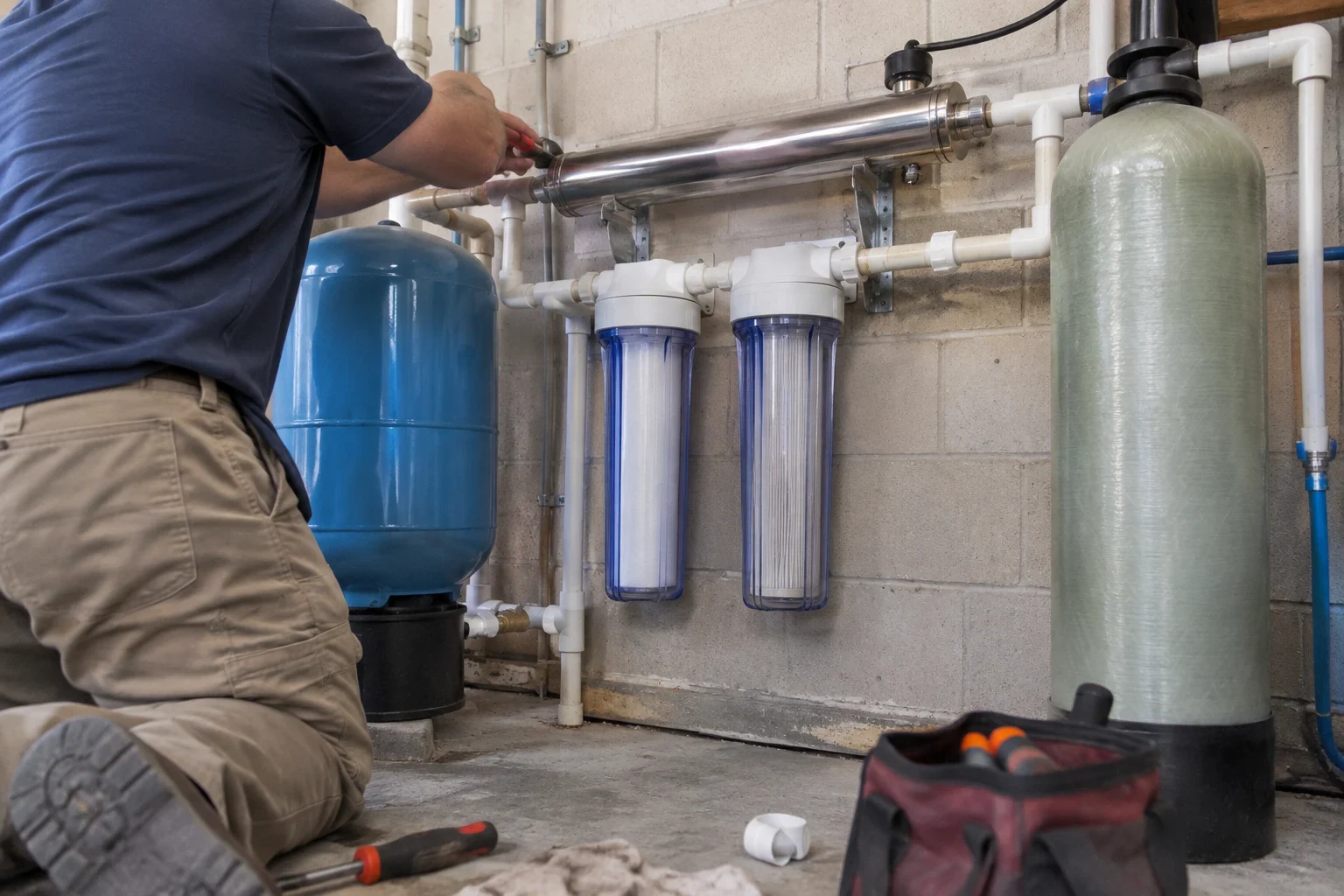
- We check the well head, pressure tank, pump flow and where the water lines run. We also go over any lab report you already have. That tells us what equipment will fit and work.
- Iron and sulfur filtration
- For rotten-egg smell and orange or black staining, we use systems that oxidize the iron and sulfur so the media can trap them. The tank backwashes itself on a schedule to flush out what it caught.
- Softening where it is needed
- Hard well water leaves scale in the water heater and spots on glass. If hardness is part of your problem, we add a softener after the filter so each tank does its own job.
- Drinking water add-on
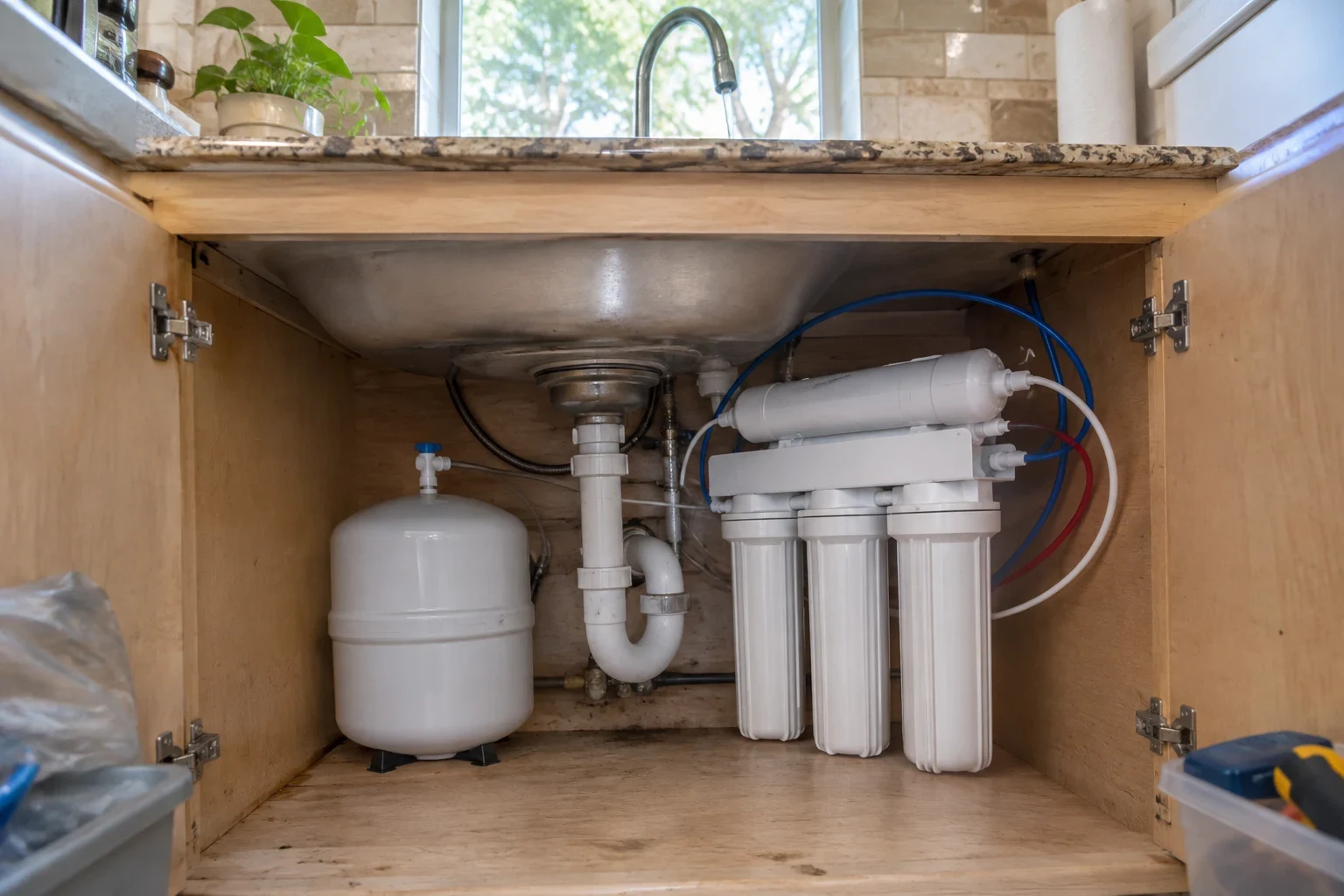
- Some families want an extra step at the kitchen sink. A reverse osmosis unit under the counter handles that and runs off the treated water.
- Clean install and walkthrough
- We bypass the water while we work, sanitize the new lines, and clean up before we leave. Then we show you the controls and the bypass valve so you are never guessing.
When a well needs treatment
Rotten-egg smell
That odor is hydrogen sulfide. It's often stronger from the hot tap because it can react inside the water heater.
Orange or rust stains
Iron marks toilets, sinks, laundry and the driveway where sprinklers spray. Bleach usually sets the stains in deeper.
Black or gray marks
Dark streaks in the toilet tank or on fixtures usually point to manganese or sulfur, which call for a different fix than iron alone.
White crust and spots
Scale on faucets, showerheads and glass is a sign of hard water. In the water heater it builds up out of sight.
Grit in faucet screens
Sand or sediment plugging aerators can also wear down valves and appliance parts as time goes on.
Old equipment that stopped working
If the tank is in place but the smell and stains have returned, the media may be used up or the valve may have failed. Our replacement page explains that job.
How the job goes
- 1
Phone call
You tell us what is going on with your water and your well. We ask a few questions about the pump, the house and how many people live there.
- 2
Visit and plan
We come out, look at the equipment and where a new system can sit. We explain what we would put in and why, with nothing extra tacked on.
- 3
Install day
We shut the water off for part of the day, set the tanks near the pressure tank, and connect power and a drain line for backwash. You will have water back before we pack up.
- 4
Start-up and check
We run the first backwash, flush the lines and set the control valve for your water use. You see the water run clear before we go.
- 5
Support down the road
We stay with you for maintenance, filter changes and any service the system needs later on. If the smell or stains start creeping back, give us a ring and we will track down why.
What moves the price
Every well is different, so the price depends on your water and your setup. We go over each part on the visit so you know what you are paying for. No figures until we have seen it.
- What is in the water
- Sulfur alone takes less equipment than sulfur plus iron plus hardness. Heavy iron or manganese can call for a larger tank or a different media.
- Pump flow and water use
- Filters need enough flow to backwash properly. A big family or a weak pump changes the size and type of system that will work.
- Where it goes
- Installing in a garage with a nearby drain and outlet is simpler than running new lines, power or a drain to a spot outside by the well.
- Number of stages
- A single filter costs less than a filter, softener and drinking water unit together. We only recommend the stages your water calls for.
Common well water questions
Something not covered here? (813) 285-5169
How do you decide which system I need?
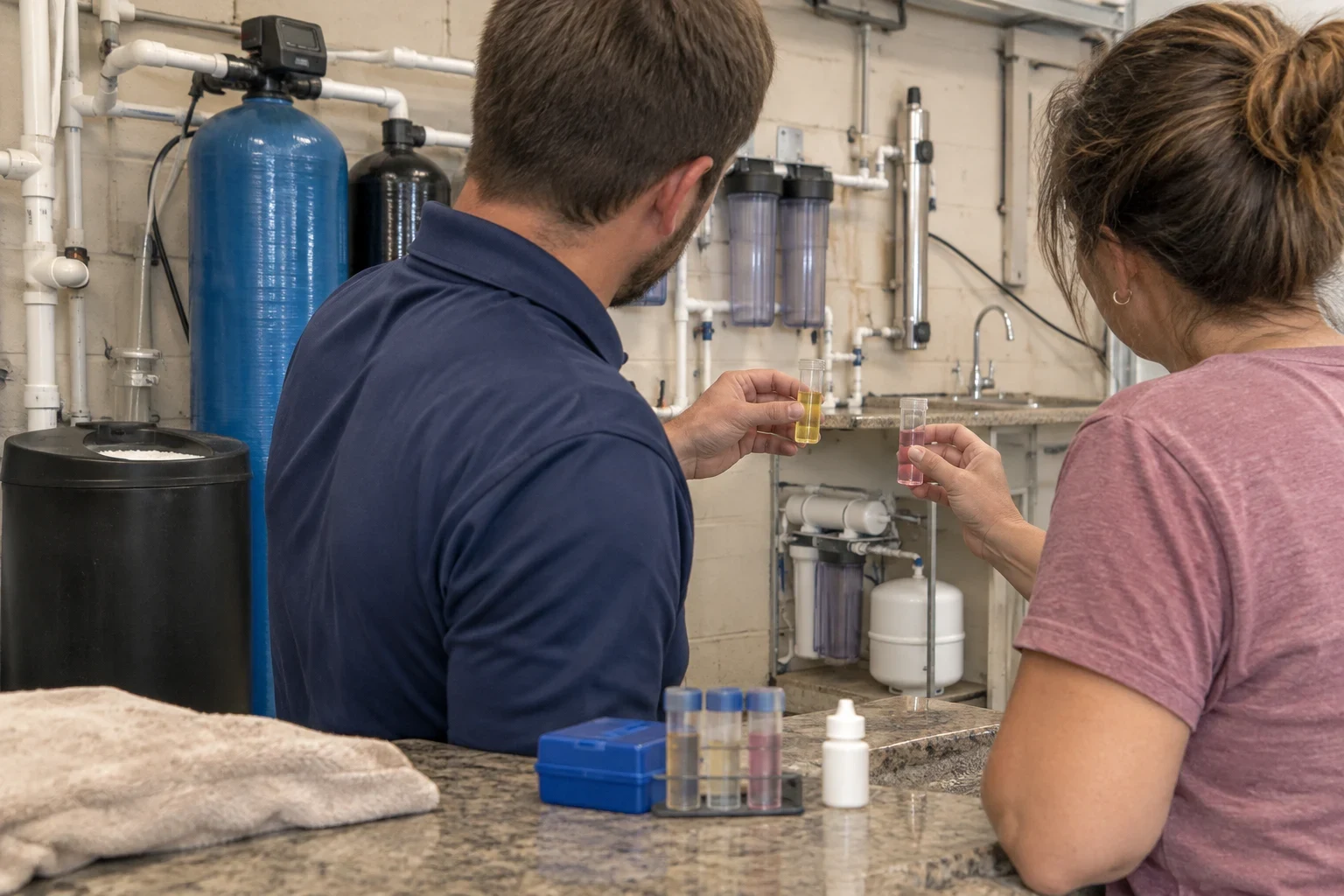
We look at what you see and smell, how your plumbing looks and any lab results you have. Stain color, whether the odor is on the hot or cold side, and scale each point to a different issue. When things aren't clear, we say so rather than guess.
Will treatment reduce my water pressure?
Not noticeably, when the system is sized to your pump and home. Pressure loss after an install usually comes from equipment too small for the flow or media clogged with iron that was never flushed. We size the tank to your pump's output so your pressure stays where it is.
Does it come with a warranty?
Yes. Control valves and filtration media on our well systems carry a 5-year warranty, and we explain the coverage at install.
How much maintenance is involved?
Iron and sulfur filters largely take care of themselves, flushing out what they trap on a schedule. With a softener, you'll add salt now and then. The media wears out after some years, and we replace it when the time comes.
Is tap water okay to drink after treatment?
Treatment handles smell, stains and scale throughout the house. Many families also put a reverse osmosis unit under the kitchen sink for drinking and cooking, and we can install both in one visit.
Ready for water that does not smell or stain
Tell us what your well water is doing. We will come take a look and lay out what it needs, plain and simple.