ServicesSoftener Repair & Maintenance
Water Softener Repair & Maintenance in Valrico
If your softener stopped doing its job, we come out, find the real cause and fix it. No guessing, no pushing a new unit you don't need. You get soft water again and a clear idea of what keeps it that way.
Most softener problems are small and fixable
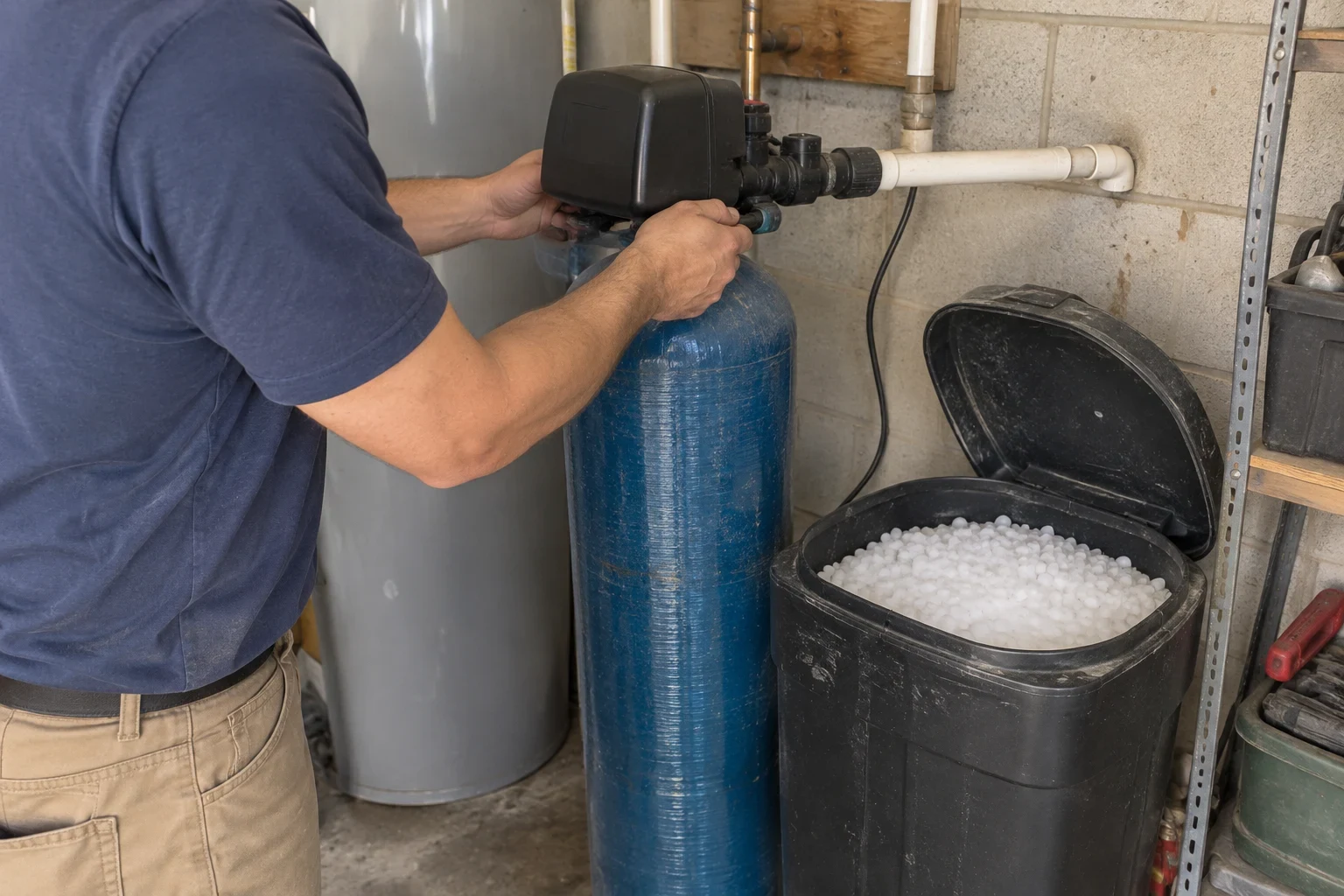
A softener is a simple machine. A tank of resin beads grabs the hardness out of your water. A brine tank of salt water washes those beads clean on a schedule. A control valve on top runs the whole cycle. When soft water stops, one of those three parts is usually to blame.
We start with the cheap and common causes first. A crust of salt stuck in the brine tank. A plugged injector. A clock that reset after a summer storm knocked the power out. Plenty of visits end right there.
If the resin is worn out or the valve is past saving, we tell you straight. Then you decide. Sometimes a repair is the smart money. Sometimes the better call is Water Softener & Filtration System Replacement, and we'll explain why with the old parts in front of you.
What a repair visit covers
Control valve check
We step the valve through each stage of a regeneration and watch it move. Worn seals, a tired motor or a stuck piston show up fast this way.
Brine tank cleanout
We break up salt bridges, scoop out the sludge that builds at the bottom and rinse the tank. Dirty brine tanks are behind a lot of hard-water complaints.
Injector and brine line
The injector is a small part with tiny holes. Sediment and salt grit plug it, and then the softener can't pull brine. We clean or replace it and check the line for leaks.
Resin condition
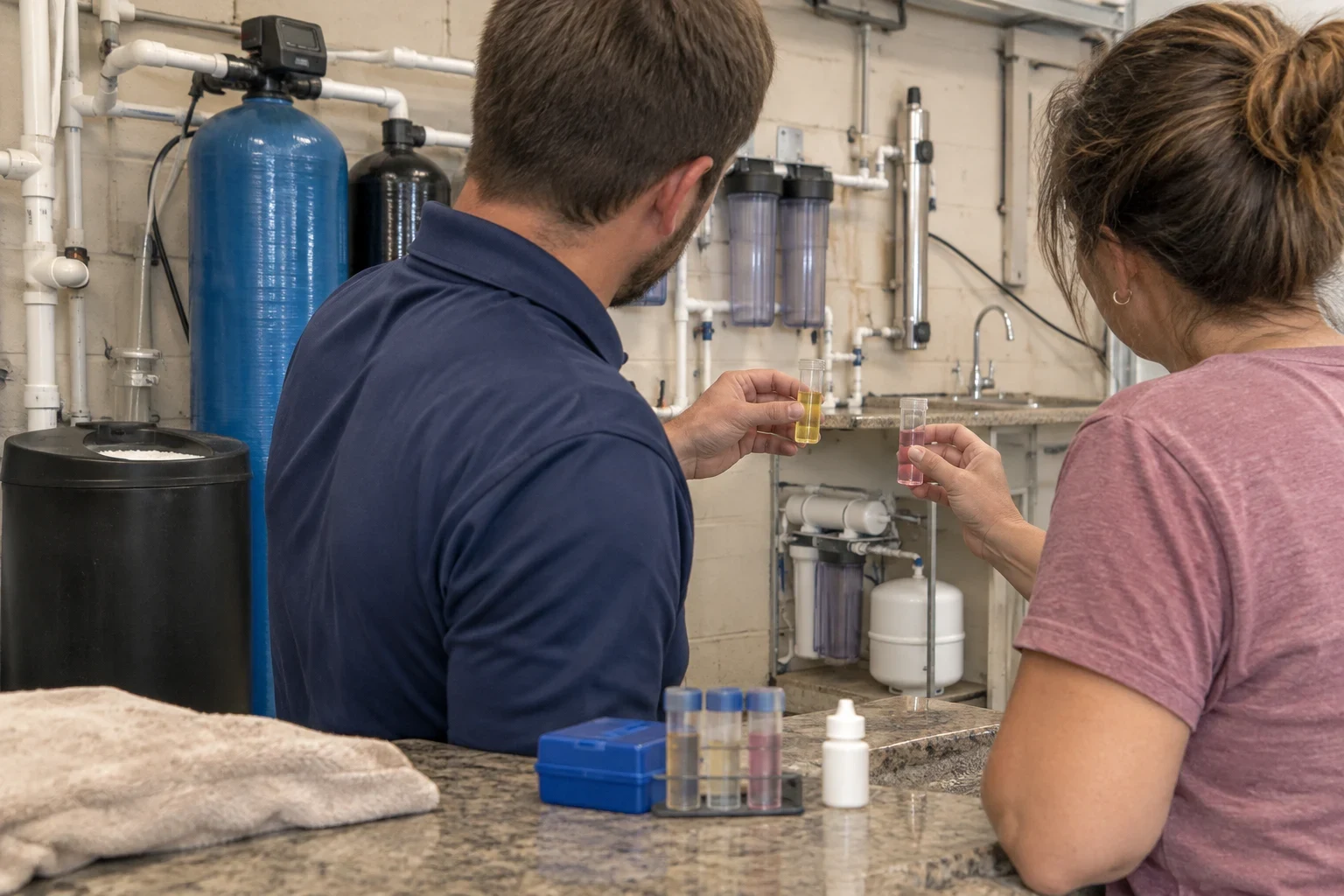
Resin can get coated with iron, especially on well water, or break down after years of use. We look at it and tell you if a resin cleaner will help or if the bed needs replacing.
Settings for your home
We set the hardness, the regeneration schedule and the clock to match how much water your household uses. Wrong settings waste salt or leave hard water slipping through.
Drain and bypass
We make sure the drain line runs clear and the bypass valve is set to send water through the softener. A half-turned bypass is a more common culprit than you'd think.
Signs your softener needs a look
- Spots and crust are back
- White spots on glasses and crust around faucet aerators mean hard water is getting through. The softener may be running but not regenerating.
- Salt level never drops
- If you added salt a month ago and it looks the same, the system likely isn't drawing brine. A salt bridge or plugged injector is the usual reason.
- Water standing high in the brine tank
- A brine tank full of water points to a stuck float, a blocked drain or a valve that isn't finishing its cycle.
- Salty-tasting water
- This often means the rinse stage is cut short. It's a valve or setting problem and worth fixing before it gets worse.
- Low pressure or beads at faucets
- Small tan beads in a faucet screen mean resin is escaping. That usually traces back to a cracked part inside the tank.
- Running or hissing at odd hours
- A softener that drains for hours or cycles over and over is wasting water and salt. The valve is likely stuck partway through.
How the visit goes
- 1
You call and describe it
Tell us the make if you know it and what you're seeing. A photo of the label isn't needed, but the model helps us bring the right parts.
- 2
We find the cause
On the day, we look at the brine tank, the valve and the plumbing around the unit. We show you what we found before we fix anything.
- 3
You get a straight answer
We explain the repair, the cost and whether the unit is worth fixing. If replacing makes more sense, we say so, but the choice stays yours.
- 4
We repair and run a cycle
After the repair we run a full regeneration and watch it through. Then we clean up the area, haul off old parts and leave the salt topped off if you have it on hand.
What sets the cost of a softener repair
We price each job once we know what failed. You hear the cost before we start, not after. Most of the difference comes down to the part, the unit and the condition inside the tanks.
- Which part failed
- Cleaning a brine tank or an injector is a short job. A new control valve or a full resin change takes more parts and more time.
- Make and age of the unit
- Common brands have parts on hand. Older or less common models can take longer to source, which can change the math on repair versus replacement.
- Resin condition
- Iron-coated or broken-down resin may need cleaning or replacement. Well water tends to wear resin faster than city water.
- Where the unit sits
- Softeners in a tight closet or tucked behind a water heater take longer to work on than one with open space in the garage.
Softener repair questions we hear
- How often should someone look over my softener?
- We suggest a checkup about every twelve months. On that visit we clean out the brine tank, check the valve and look at the resin. If your home runs on well water with iron in it, plan on more frequent visits.
- Will you work on a softener you didn't install?
- Yes. We repair most common brands no matter who put them in. If parts for an older model are hard to find, we'll tell you before you spend money.
- Is my old softener worth repairing?
- Often it is. A clogged injector or a salt bridge costs far less to fix than a new unit. If the valve and resin are both worn out, we'll lay out the numbers so you can compare repair against replacement.
- Do your repairs come with a warranty?
- Yes. Control valves and filtration media carry a 5-year warranty. We'll go over what that covers on your job before we leave.
- Can I keep using water while the softener is broken?
- Yes. Your water is safe to use, it just won't be softened. If the unit is leaking or draining nonstop, turn the bypass valve and leave it until we get there.
- What kind of salt should I use?
- Clean pellet salt works well in most units and is less likely to form a crust. Rock salt carries more dirt that settles in the brine tank. We can tell you what suits your model.
Let's get your water soft again
Tell us what the softener is doing and we'll set a time to come look. After the repair we stay around with ongoing customer support for maintenance, filter replacements, and service needs.