ServicesWater Softeners
Water Softeners in Valrico
Hard water builds chalky scale on your fixtures, leaves cloudy film on dishes and coats the inside of your water heater. We match a softener to your water and how many people use it, put it in neatly and teach you how to run it. If another fix suits you better, we'll say so.
How Softening Works and Who It Fits
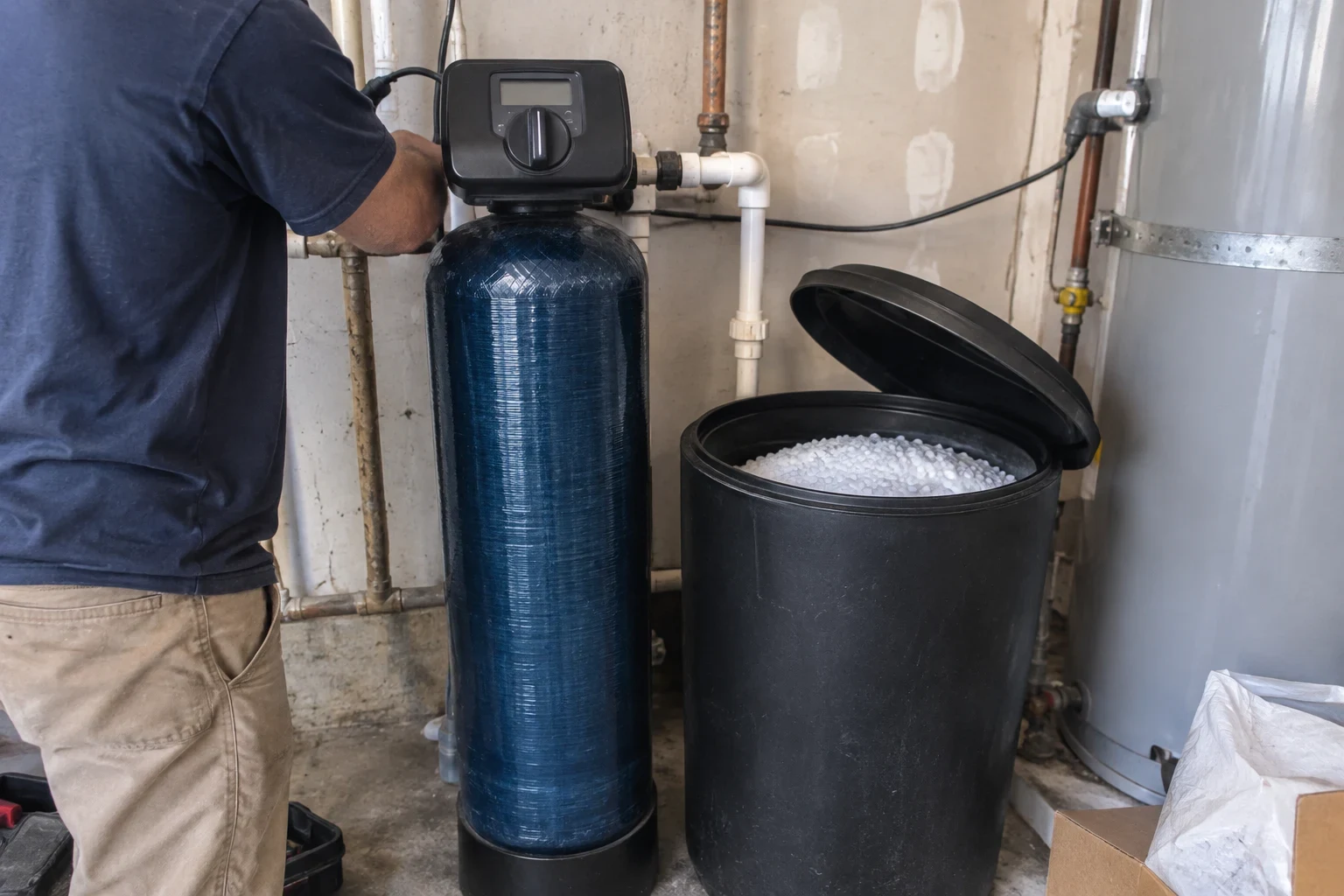
A softener is a tank filled with tiny resin beads. Water passes over them, and the beads pull out calcium and magnesium while letting go of sodium or potassium. On a set schedule, the unit rinses the beads with brine from the salt tank, flushes the trapped minerals to the drain and gets ready to go again.
Hardness is the one thing a softener fixes. It does nothing for chlorine taste, odors or most other complaints. If those are your problem, Whole-Home Filtration or Chlorine & Chloramine Removal is likely the better fit, and we'll say so before you spend money on the wrong equipment.
If hard water really is what you're fighting, a well-sized softener runs quietly, uses salt sparingly and keeps scale out of your pipes and appliances for a long time.
What Your Softener Install Includes
- Sizing to your household
- We look at your hardness number if you have one, your water source, how many people live there and how many bathrooms you have. That tells us how much resin you need, so the unit isn't cycling every night or sitting oversized.
- Bypass valve and plumbing tie-in
- We hook into your main line or an existing softener loop and add a bypass valve. With it, you can take the softener offline and still have water in your home.
- Proper drain line
- Each regeneration sends rinse water out of the unit. We run that drain line with an air gap so dirty water can't get pulled back into your supply.
- Brine tank set and salted
- The salt tank goes in beside the softener, and we pour in its first bags of salt. Then we watch a cycle to make sure brine is getting drawn into the resin tank.
- Programming and a walkthrough
- We enter your hardness and capacity and pick a regeneration time, usually the middle of the night when no one's using water. Then we show you the bypass, the salt level and what the display means.
When Hard Water Shows Up in Your Home
Chalky buildup at the tap
Crusty white deposits on faucets, showerheads and along the toilet's waterline are mineral scale. You can clean them, but they come right back within weeks.
Cloudy glassware
Glasses leave the dishwasher filmed or spotted even with rinse aid. The water dries off and the minerals stay on the glass.
Soap that barely suds
Shampoo and dish soap seem to disappear with little foam. Hard water ties up soap, so you use more and rinse longer.
A noisy water heater
Popping or knocking from a tank water heater often means scale has settled on the bottom. That crust slows heating and makes the burner or element work harder.
An existing softener falling behind
If you already own a softener and scale is creeping back, it may only need service. See our Water Softener Repair & Maintenance page, and we'll check it before talking about a new one.
What Sets the Cost of a Softener
Every softener install is a little different, so we quote yours after we've looked at the setup. The estimate lists the equipment and the labor separately, so nothing is lumped together or hidden. Here is what tends to move the number most.
How big the unit needs to be
A bigger household or harder water needs more resin to keep up. More resin means a larger tank, and that raises the equipment cost.
What plumbing is already there
If your home already has a softener loop with a drain and an outlet nearby, the tie-in is quick. Running new pipe, a longer drain line or a fresh loop takes more time and parts.
Other treatment in the line
Well water with iron or sulfur usually needs a filter ahead of the softener so the resin isn't fouled. Our Well Water Treatment page explains that, and when both are needed we quote them as one job.
Removing an old unit
Taking out an existing softener and hauling it away adds some labor. If your current system has stopped working, the Water Softener & Filtration System Replacement page goes into that job.
From First Call to Soft Water
- 1
A short phone conversation
Let us know what you're seeing at the faucets, whether you're on city water or a well, and roughly where your main line comes in. We'll ask a couple of questions and set a time to stop by.
- 2
A look at your setup
We check the spot for the softener, the pipe size, the drain and the closest outlet. In a lot of Valrico homes that spot is the garage, near the main line. You get a written estimate with each part and the labor listed separately before any work starts.
- 3
The install
We shut off the water, add the bypass, set the resin and brine tanks, run the drain and bring the water back on. Most installs wrap up in a few hours. The work area gets covered, and we take the boxes and old fittings with us.
- 4
Programming and a final check
We set the valve, run a regeneration and check a faucet for soft water. Before we leave, we show you the salt, the settings and how the bypass works.
Water Softener Questions
How do I know if I actually need a softener?
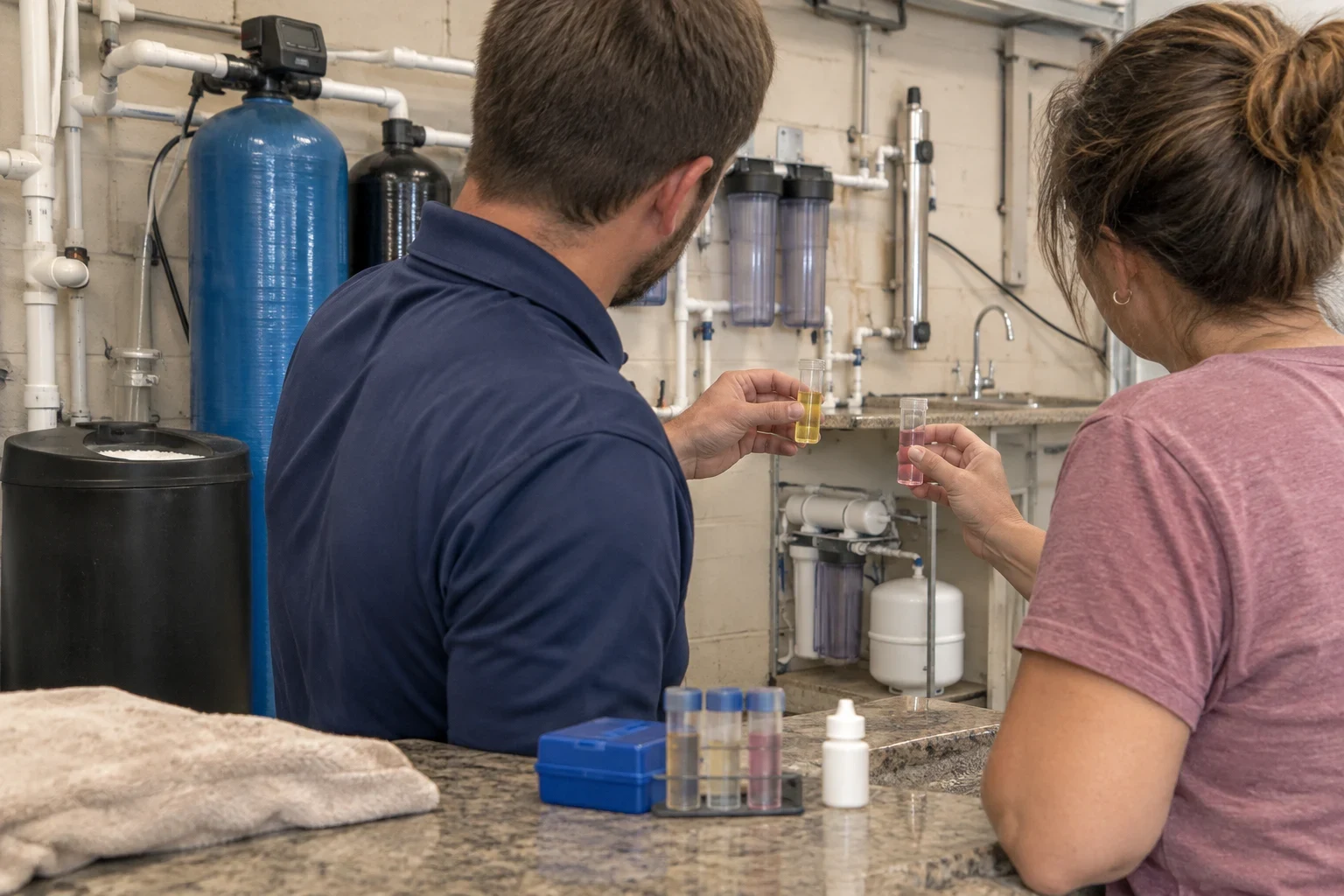
Scale on fixtures, spotted glasses and soap that barely suds up are the usual tells. If you have a hardness number from your utility's annual water report or an older test, keep it nearby when you call. If the real complaint is taste or smell, a softener won't fix it, and we'll point you to something that will.
Is softened water okay to drink?
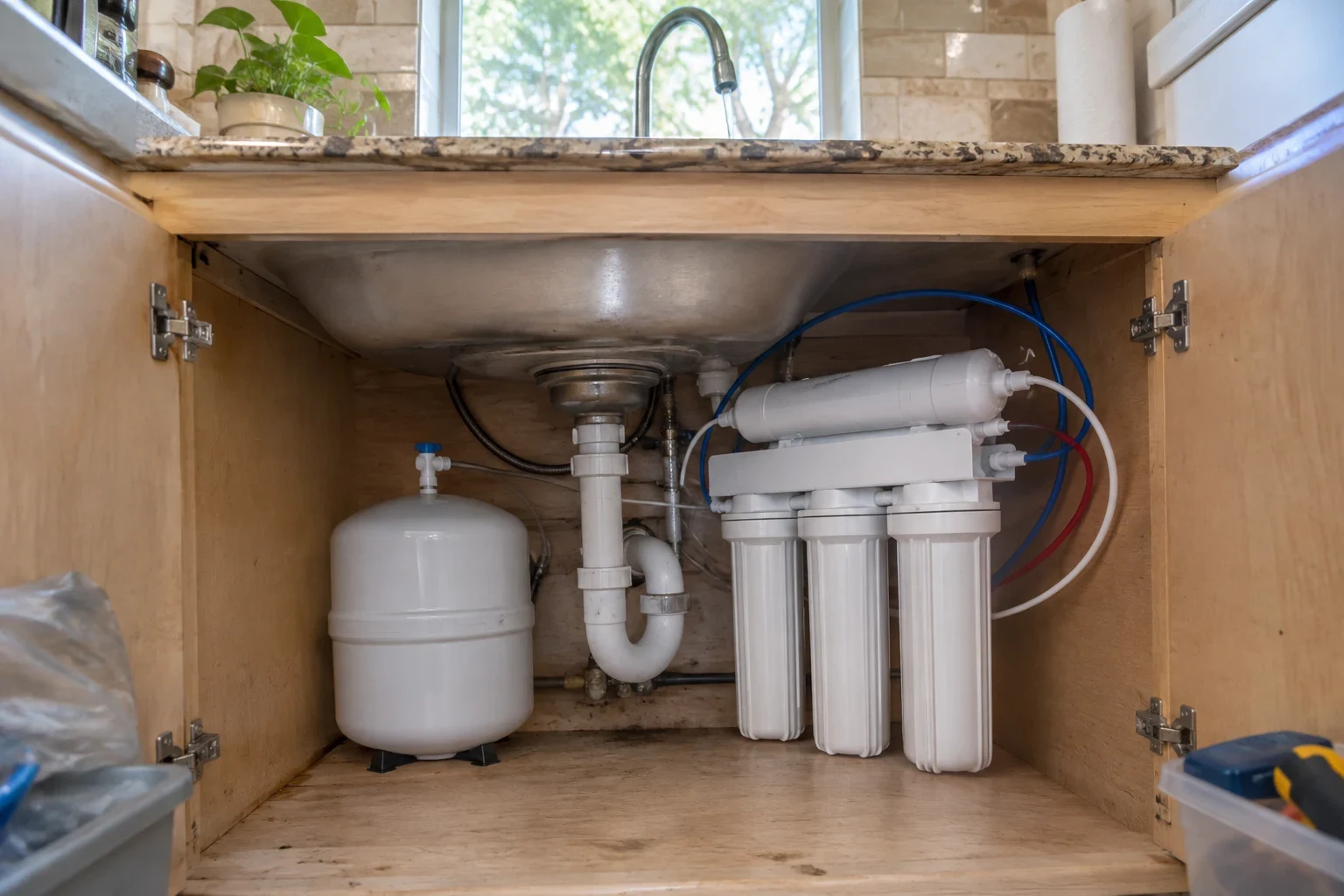
For most people it is. Softening adds a small amount of sodium, and a little more when the water starts out very hard. If you're watching sodium, you can use potassium chloride in the brine tank, or add a Reverse Osmosis system at the kitchen sink for drinking and cooking water.
How much salt will it use?
Salt use depends on how hard your water is, how many gallons your household runs through and the valve settings. A properly sized softener with a modern valve only regenerates once the resin is spent, so it doesn't burn through salt on a timer. We'll show you how to check the brine tank and spot when it needs another bag.
What warranty comes with it?
The softeners we install carry a 5-year warranty on control valves and filtration media. We'll explain what that covers in everyday terms when we go over your estimate.
Who do I call if something goes wrong later?
Us. Once the install is done, you have ongoing customer support for maintenance, filter replacements, and service needs. Call the same number and we'll figure out what's happening.
Ready to Be Done With Scale?
Tell us what you're seeing at the tap and where your plumbing comes in. We'll talk it through and set up a visit to look at your setup.